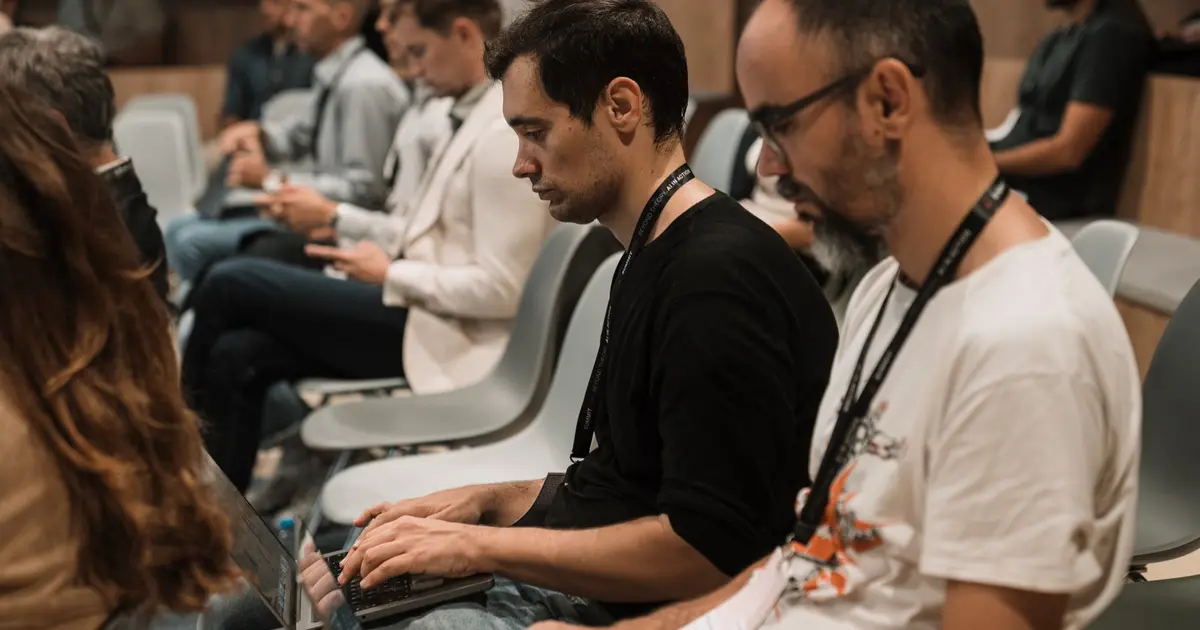
Edition context: this guide covers the 2026 reference editions. Confirm future dates and technical programmes with each organiser; the September 2026 Barcelona edition has finished.
"Best" depends on what you build. A research scientist publishing on diffusion models and a platform engineer wiring up an agent pipeline want very different rooms, and the conference calendar now serves both. This guide is for the people who write the code, not just sit in the keynote: it groups the strongest events by focus and level so working AI and ML engineers can pick fast.
Methodology
How we ranked these
This list is for people who write the code, not just sit in the keynote, so we weighted it accordingly:
These are editorial calls made and signed by Guillaume Rostand, Tanguy Wincker and Adam Hruska (engineers and organisers who have sat in these rooms), not the output of a scraper sorting by attendance.
How to choose an AI conference as an engineer
"Best" depends on what you build. A research scientist publishing on diffusion models and a platform engineer wiring up an agent pipeline want very different rooms. Before booking, sort events along three axes:
Notable machine-learning models produced by industry rather than academia in 2024.
U.S. private AI investment in 2024, roughly 12 times China's.
The rest of this guide groups the strongest events by those axes so you can pick fast. Every date and city below is taken from each event's official communication.
The best AI engineering conferences
These are the events built for the AI engineer role specifically: shipping LLM apps, agents, evals, retrieval systems and AI infrastructure in production. Most run on the open-source stack (generative AI tooling, PyTorch and JAX) and feature the companies behind it.
1. AI Engineer World's Fair, San Francisco
Held 29 June–2 July 2026 at Moscone West, this is the largest technical AI conference in the world, with roughly 29 tracks, 300 speakers and 6,000+ attendees drawn from AI engineers, founders and VPs of AI. Major labs including OpenAI, Anthropic and Google DeepMind take part. If you only attend one applied event, this is the default choice.
2. QCon London (AI Engineering track), London
QCon London runs 16–18 March 2026 at the QEII Centre, with a dedicated AI Engineering track on building, deploying and maintaining production-ready ML systems and intelligent applications at scale. It pairs senior software-engineering audiences with practical AI content, plus a sibling edition, QCon AI Boston, in the US.
3. Databricks Data + AI Summit, San Francisco
Running 15–18 June 2026, the Summit gathers a very large data-and-ML crowd around 700+ sessions on data engineering, machine learning, Delta Lake and Apache Spark. It is the reference event if your AI work is anchored in the Databricks data platform.
4. NVIDIA GTC, San Jose
GTC (16–19 March 2026) is NVIDIA's flagship developer conference, often called the "Woodstock of AI." Expect deep sessions on CUDA, TensorRT, inference optimisation, robotics and agentic systems: the hardware and software that define what ships in production next.
The best AI developer conferences
Broaden the lens from the pure "AI engineer" to developers, platform engineers and ML engineers, and a second tier of strong events appears, heavy on open source, infrastructure and hands-on learning.
If you want a single AI tech summit that blends engineering depth with European business context, AI Summit Europe in Barcelona sits alongside these as the applied, ecosystem-wide option.
AI engineering & developer conferences: comparison table
The major events at a glance, sorted by calendar order:
| Conference | City | Dates (2026) | Focus | Level |
|---|---|---|---|---|
| QCon London | London | 16–18 Mar | AI engineering, production ML | Practitioner |
| NVIDIA GTC | San Jose | 16–19 Mar | GPU, inference, agentic AI | Practitioner |
| KubeCon + CloudNativeCon EU | Amsterdam | 23–26 Mar | Cloud-native, AI on Kubernetes | Practitioner |
| PyCon DE & PyData | Darmstadt | 14–17 Apr | Python, applied ML, data | Practitioner |
| ICLR | Rio de Janeiro | 23–27 Apr | Deep learning research | Academic |
| CVPR | Denver | 3–7 Jun | Computer vision research | Academic |
| Berlin Buzzwords | Berlin | 7–9 Jun | Data infra, search, ML | Practitioner |
| Databricks Data + AI Summit | San Francisco | 15–18 Jun | Data + ML platform | Practitioner |
| AI Engineer World's Fair | San Francisco | 29 Jun–2 Jul | Applied AI engineering | Practitioner |
| ICML | Seoul | 6–11 Jul | Machine learning research | Academic |
| AI Engineer Paris | Paris | 23–24 Sep | Applied AI engineering (EU) | Practitioner |
| NeurIPS | Sydney | 6–12 Dec | ML & AI research | Academic |
Dates and cities are sourced from each conference's official site. Always confirm before booking, as venues and schedules can shift. For the full picture, see our complete AI conferences guide.
Research vs applied: which AI conference is right for you?
The single most useful distinction is research vs applied, because the two tracks barely overlap in who attends and what you take home.
Research conferences are peer-reviewed venues where the field's state of the art is published: ICML (Seoul), NeurIPS (Sydney, with satellite events in Paris and Atlanta), ICLR (Rio de Janeiro) and CVPR (Denver). They are essential if you train models, publish papers, or need to track frontier methods. They are dense, academic, and not optimised for "how do I ship this on Monday."
Applied conferences (the AI Engineer events, QCon, KubeCon, Databricks and the PyData family) are where you learn deployment patterns, evaluation, tooling, agent design and MLOps from people running these systems at scale. Most working AI engineers and ML engineers get more immediate value here.
A practical split: if your job title includes "research scientist," prioritise the academic venues; if it includes "engineer," start with the applied list and add one research conference per year to stay current.
Are there AI engineer conferences in Europe?
Yes, and the European calendar has matured fast. For an AI engineer in Europe, you no longer need to fly to San Francisco to find a world-class applied event:
AI Summit Barcelona is built precisely for this audience: builders and ML engineers who want technical substance plus access to the companies deploying AI at scale, from Hugging Face to Databricks and NVIDIA. The line-up includes practitioners such as Nouamane Tazi (AI Researcher, Hugging Face) and Luc Julia (co-creator of Siri). Browse the 2026 speaker archive for the edition’s programme context.
The calendar is rich enough that there is a right event for every kind of builder: frontier research at ICML and NeurIPS, production craft at the AI Engineer World's Fair and QCon, infrastructure at KubeCon, and a maturing European scene led by AI Engineer Paris and AI Summit Barcelona. Pick by focus and level, book early, and you will spend your conference budget where it actually moves your work forward.
Continue learning through Summit recordings
Check the available catalogue and access conditions for perspectives relevant to the questions raised in this guide.
Sources
Frequently asked questions
What is the best AI engineering conference?
For applied work, the AI Engineer World's Fair in San Francisco (29 June to 2 July 2026) is widely regarded as the best, as the largest technical conference built specifically for AI engineers shipping LLM apps, agents and AI infrastructure. In Europe, AI Engineer Paris (23 to 24 September 2026) is the closest equivalent. If your focus is research, ICML and NeurIPS lead instead.
What is the difference between an AI developer conference and a research conference?
Developer (applied) conferences such as AI Engineer, QCon, KubeCon and Databricks teach you how to build, deploy and operate AI systems in production. Research conferences such as ICML, NeurIPS, ICLR and CVPR are peer-reviewed venues focused on advancing the science. Engineers usually start with applied events and add one research conference a year.
Where can AI developers network?
The biggest networking opportunities are at large applied events: the AI Engineer World's Fair and Databricks Data + AI Summit in the US, and KubeCon Europe, AI Engineer Paris and AI Summit Europe in Barcelona across Europe. Smaller community events like PyData and Berlin Buzzwords are excellent for deeper, hands-on connections.
Are there AI engineer conferences in Europe?
Yes. Strong options include AI Engineer Paris (September), QCon London (March), KubeCon + CloudNativeCon Europe in Amsterdam (March), PyCon DE & PyData (April), Berlin Buzzwords (June) and AI Summit Europe in Barcelona.
Which AI conferences are best for ML engineers specifically?
ML engineers get strong value from Databricks Data + AI Summit and NVIDIA GTC for platform and infrastructure, PyData and Berlin Buzzwords for open-source ML on PyTorch and JAX, and KubeCon's MLOps-focused co-located days. To track the underlying research, add ICML or NeurIPS.
When and where is the AI Engineer World's Fair?
The AI Engineer World's Fair 2026 runs 29 June to 2 July 2026 at Moscone West, San Francisco, with around 29 tracks, 300 speakers and over 6,000 attendees.
Written by
- Guillaume RostandCEO, AI Summit Barcelona
Related reading
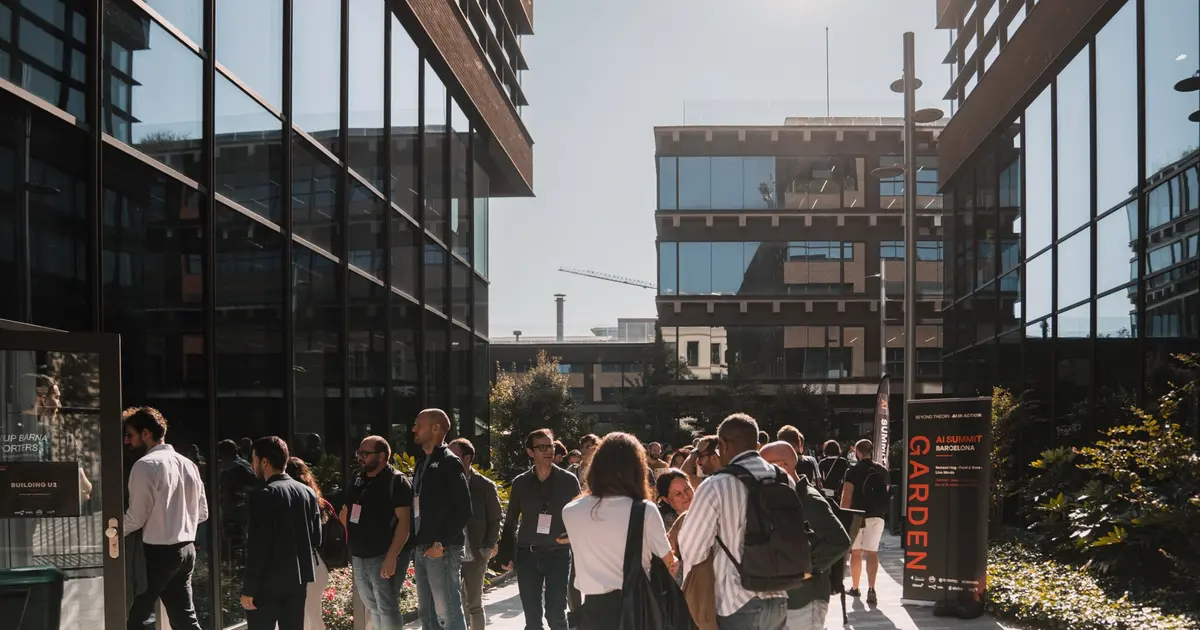
AI Conferences: The Complete Guide
Understand the main event formats and what to consider when choosing between them. Start with the purpose of your visit, then explore the more focused comparisons and planning resources.
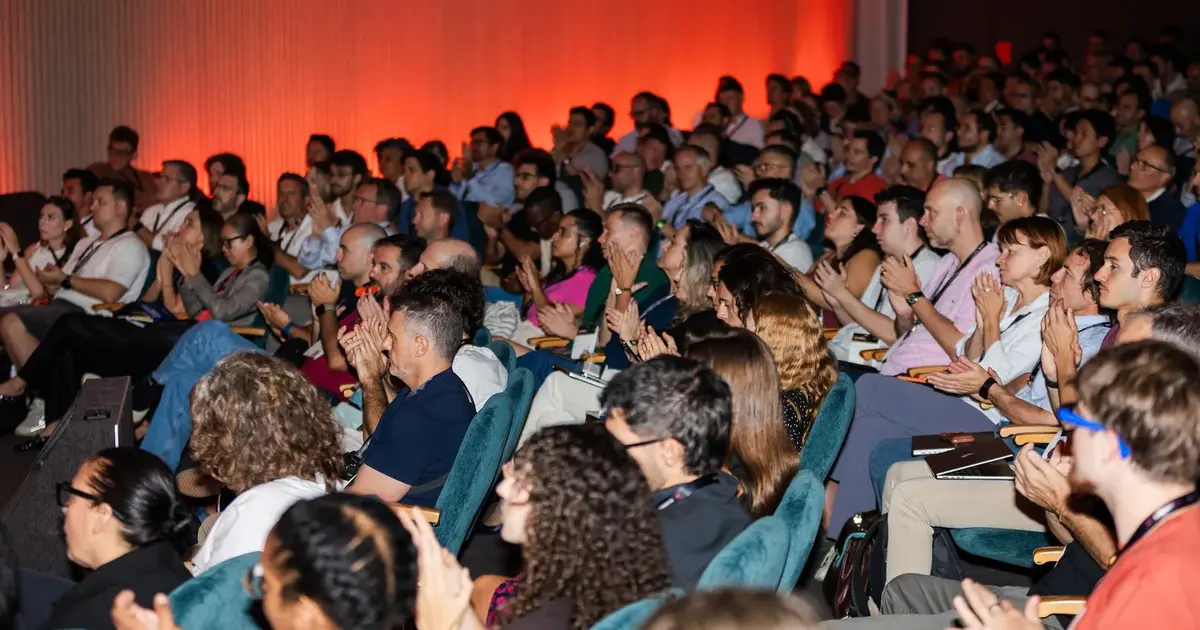
Best AI Conferences in Europe
Compare events by focus, audience and the experience you are looking for. Review the selection criteria and check current details with the organiser before making plans.

The Best Large Language Models (LLMs), Compared
Explore differences between models and the trade-offs that deserve investigation. A comparison can help you prepare questions about capabilities and limitations. Before selecting a tool, connect those questions to the task, information and review process that matter in your own working environment.